Ask two people what a home costs in Cape Coral this year and you'll get the same number back: somewhere in the mid-$300,000s. Ask them what it costs to own that home for a year, and the answers stop agreeing. One homeowner on a saltwater canal, sitting in flood Zone X, pays somewhere between $2,000 and $3,500 a year for flood coverage. A neighbor a few streets over, on a freshwater canal mapped into Zone AE, pays $3,000 to $8,000 or more for the same size policy. Same city. Same median. The cheaper insurance bill belongs to the saltwater house.
That gap is the story the median price can't tell, and it's the first thing worth understanding before you compare Cape Coral to anywhere else in Southwest Florida.
The number everyone quotes is an average of two different products
Cape Coral's citywide median sale price has been sitting in the roughly $360,000 to $375,000 range through the first half of 2026, depending on which tracker you check and what three-month window it's measuring. Inventory has climbed to somewhere between 7 and 8 months of supply as of early August 2026, homes are taking around 56 to 60 days to sell, and the sale-to-list ratio has drifted down to around 96 percent. Price cuts have become common enough that more than seven out of ten active listings have taken at least one reduction. All of that describes a market that favors buyers.
But that description applies unevenly. As of the August 3, 2026 weekly market update covering Cape Coral and Fort Myers, inland single-family homes have absorbed the most softening, running an estimated 5 to 8 percent below their 2022-era peak. Direct Gulf-access waterfront, meanwhile, has kept commanding a real premium through the same stretch, because a canal lot that connects to open water without a bridge in the way is not a product anyone is making more of.
Averaging those two trend lines into one median price is technically correct and practically useless. It's like averaging the price of a used sedan and a new pickup truck and reporting the "average vehicle cost." The number is real. It just doesn't describe anything you can actually go buy.
Three products, one zip code
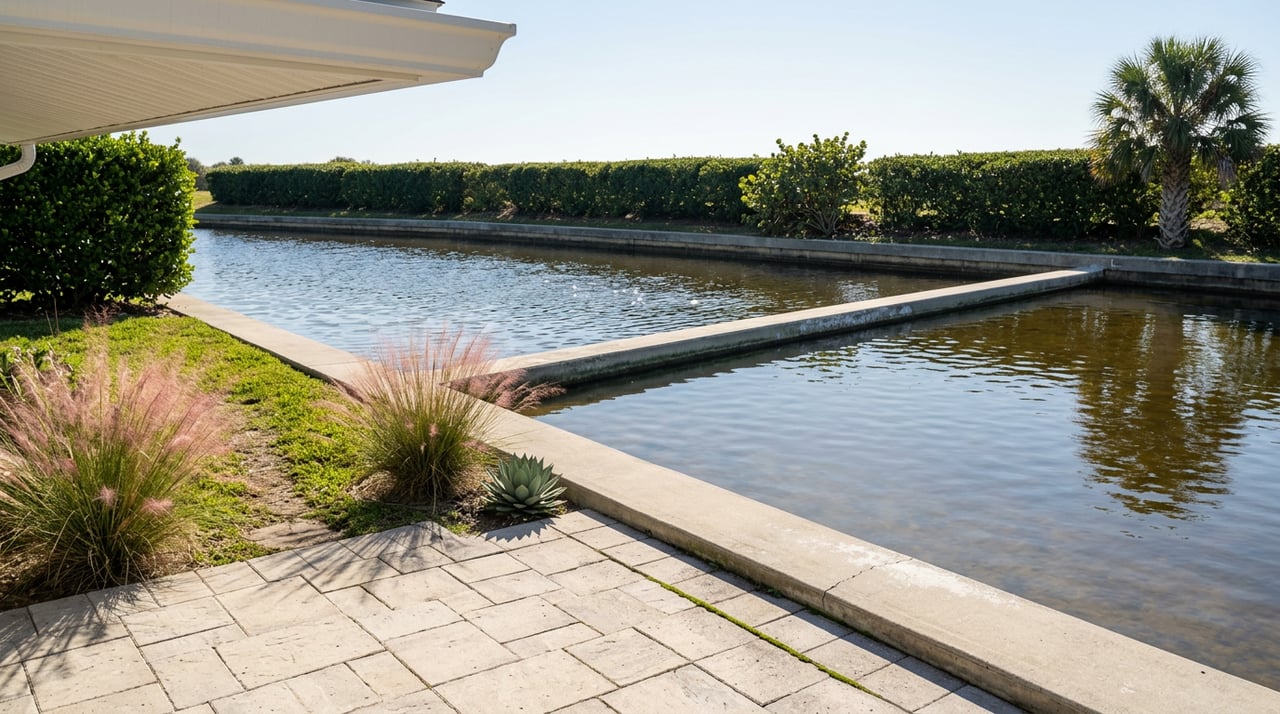
Cape Coral's canal system runs more than 400 miles, and every one of those miles falls into one of three categories that price and behave differently.
| Canal type | Typical price range | Typical days on market |
|---|---|---|
| Direct Gulf access (no bridges) | Roughly $700,000 to $2 million+, with standard 3/2s starting near $800,000 | 50 to 75 days |
| Indirect Gulf access (one or more bridges) | Roughly $550,000 to $850,000 depending on bridge count and route | 50 to 75 days |
| Freshwater canal (landlocked, no Gulf connection) | Roughly $320,000 to $600,000 for new construction and updated resale | 60 to 95 days |
Geography sorts these products predictably. The southwest quadrant, anchored by Cape Harbour and the 8 Lakes area, blends Gulf-access estates with more affordable canal frontage and is where the bulk of new luxury waterfront construction is happening. The southeast quadrant, the oldest section of the city, mixes direct and indirect access with mature landscaping and some of the fastest boating routes to open water. Burnt Store Marina sits at the city's northern edge as a gated deep-water community with its own Charlotte Harbor access. The northeast quadrant is the fastest-growing part of the city and is dominated by freshwater canals, which is exactly where you'll find most of the new construction under $500,000.
A dry-lot home with no canal at all rounds out the picture, and it's the segment absorbing the most price pressure right now because it competes directly with new-build incentives, which we'll get to.
None of that shows up in a median. It shows up when you pull up an individual listing and check which of these three products you're actually looking at.
Here's the part that surprises almost every relocating buyer: canal type and insurance premium don't move together the way intuition says they should. Flood zone and elevation, not water type, do most of the work. A saltwater canal home sitting in Zone X can carry a lower annual premium than a freshwater canal home sitting in Zone AE. The presence of a boat dock tells you nothing about your flood risk. The elevation certificate does.
The bridge is the real border, not the mile marker
If you're shopping indirect Gulf access, the number that matters isn't the distance to the river, it's the clearance under the bridges between your dock and the Caloosahatchee. Fixed bridge clearances across Cape Coral's canal network run from about 9 to 15 feet depending on the route, and boats with a tall T-top or an overhead radar arch can be blocked by a bridge that a shorter boat clears easily. Buyers who assume their current boat will simply follow them to a new dock have had deals unravel over a measurement nobody thought to check before the offer went in.
The Chiquita Lock, which connects the downtown canal network to the Caloosahatchee River, is the literal gateway most boaters pass through on the way to open water, and it's a useful mental marker for how much of Cape Coral's "Gulf access" runs through a controlled point rather than a straight shot. Knowing your bridge count and clearance before you fall for a canal view is the difference between a boat that fits your life and a dock that just looks good in photos.
Builders are quietly setting the floor under the median
Builders have been a major share of the active inventory this year, with new construction accounting for over 30 percent of homes on the market as of early 2026, concentrated heavily in the northeast quadrant with builders like DR Horton, Maronda Homes, and LGI Homes active on freshwater and dry lots. Builders carry financing costs that pressure them to move inventory, so they lean on incentives, rate buydowns, and closing cost credits that a resale seller competing in the same price band often can't match dollar for dollar.
That matters for anyone reading a median and assuming it reflects what a comparable resale home will actually sell for. In the segments where new construction is thick on the ground, the builder's incentivized price is functionally setting the ceiling that resale sellers have to price under, which is a real part of why inland and freshwater softening has run deeper than the waterfront segment over the same period.
What to ask before the price means anything
Before you compare a Cape Coral listing to anything you've seen elsewhere in Southwest Florida, get answers to these:
- Is this direct Gulf access, indirect Gulf access with bridges, or a freshwater canal that dead-ends into a lake?
- If there are bridges between the dock and open water, what's the clearance, and does your boat actually fit under it?
- What is the current flood zone and elevation, and what does that actually price out to for insurance, not what the seller has been paying?
- Is the seawall the seller's responsibility, and if so, when was it last inspected or replaced? Replacement runs roughly $150 to $300 per linear foot, which adds up fast on a full canal lot.
- If it's new construction, what incentive is the builder offering right now, and how does the all-in price compare to the resale home next door?
Every one of these questions turns a single sticker price into an actual cost of ownership, which is the only number that matters once you're comparing this house to the next one.
A short FAQ
Is Cape Coral a buyer's market right now? Broadly yes, as of summer 2026. Inventory sits around 7 to 8 months of supply, price reductions are common, and the sale-to-list ratio has settled near 96 percent, all of which favor negotiation. Direct Gulf-access waterfront is the exception, where scarcity keeps sellers with more leverage than the citywide numbers suggest.
Do I need direct Gulf access to enjoy living on the water in Cape Coral? No. Freshwater canals still offer a water view, a private dock, and easy kayaking or fishing. What you give up is the ability to take a boat straight out to Sanibel, Captiva, or the Gulf without trailering it first.
What does seawall replacement actually cost? Roughly $150 to $300 per linear foot depending on materials and site conditions. On a typical 100-foot canal lot, that's a $15,000 to $30,000 project, and in most cases the homeowner owns the seawall out to the center of the canal and is responsible for its upkeep.
If you're comparing Cape Coral against another Southwest Florida community, or trying to figure out which of these three canal products actually fits how you'll use the water, I'd rather walk you through the real numbers than let a median do the talking. Lindsey Moffat can pull the specific comparables, insurance context, and bridge details for the exact stretch of canal you're looking at. Let's Connect.