If you live on a Cape Coral canal, you know storms can turn boats, lifts, and lanais into liabilities overnight. It is stressful to think about what to move, what to secure, and what to document, especially when a storm is tracking toward the Gulf. The good news is that a clear plan, done early, can protect your property and speed up your recovery. This guide gives you simple, local checklists for boats, lifts, and lanais, plus what to do after the storm and how to handle permits in Cape Coral and Lee County. Let’s dive in.
Why Cape Coral prepares differently
Cape Coral sits low to the water with miles of canals and many waterfront homes. That means you face hurricane winds, storm surge, wave action in canals, and wind‑blown debris. Boats and lifts near the waterline can shift or fail in surge. Screened lanais and big glass doors often see wind and water damage.
Hurricane season runs June 1 through November 30. Do not wait for a warning to schedule help, haul a boat, or secure a lift. Demand spikes fast before a storm, and supply chains and contractors book quickly.
Boat preparation checklist
Use a simple decision plan
- Best option: haul out and move your boat to inland storage or a protected, higher location.
- If haul‑out is not possible: secure the boat in the most protected harbor or mooring available. Avoid open water.
- If you plan to leave it on a lift: review lift guidance below. Many experts recommend removing the boat from the lift before a major storm.
Do these steps early
- Contact your insurance agent and follow your policy’s hurricane prep requirements.
- Haul out when you can. Store on a trailer or at a secured facility.
- Remove canvas, biminis, sails, cushions, loose gear, and portable electronics. Store them indoors.
- Secure or remove batteries. Check bilge pumps. Disconnect chargers from shore power.
- Top off fuel to reduce condensation, following insurer and manufacturer guidance.
- If securing in the water, use multiple lines with proper angles and chafe protection. Use several attachment points.
- Add extra fenders, tied so they cannot wash away.
- Photograph the hull, registration numbers, hull ID, name, and interior before the storm.
- Keep registration, insurance, and photos in a waterproof bag and a safe offsite place.
Boat lift preparation checklist
Lifts take a beating in surge and waves. Frames, cables, and motors can be damaged, and energized circuits are a shock risk.
- Review your lift manufacturer’s storm protocol and ask your installer for model‑specific steps.
- If possible, remove the boat from the lift and secure it on shore. This reduces risk for both boat and lift.
- Disconnect lift power at the breaker and secure motors and electronics per manufacturer instructions. Use a licensed electrician for shutoffs and reconnection.
- If removal is impossible, follow the manufacturer’s guidance on raising or lowering the lift. Do not improvise.
- Secure or remove loose lift components and canopy frames.
- Photograph the lift, pilings, cables, fasteners, and any serial numbers.
- Keep contact info for an insured marine contractor who can respond after the storm.
Lanai and patio preparation checklist
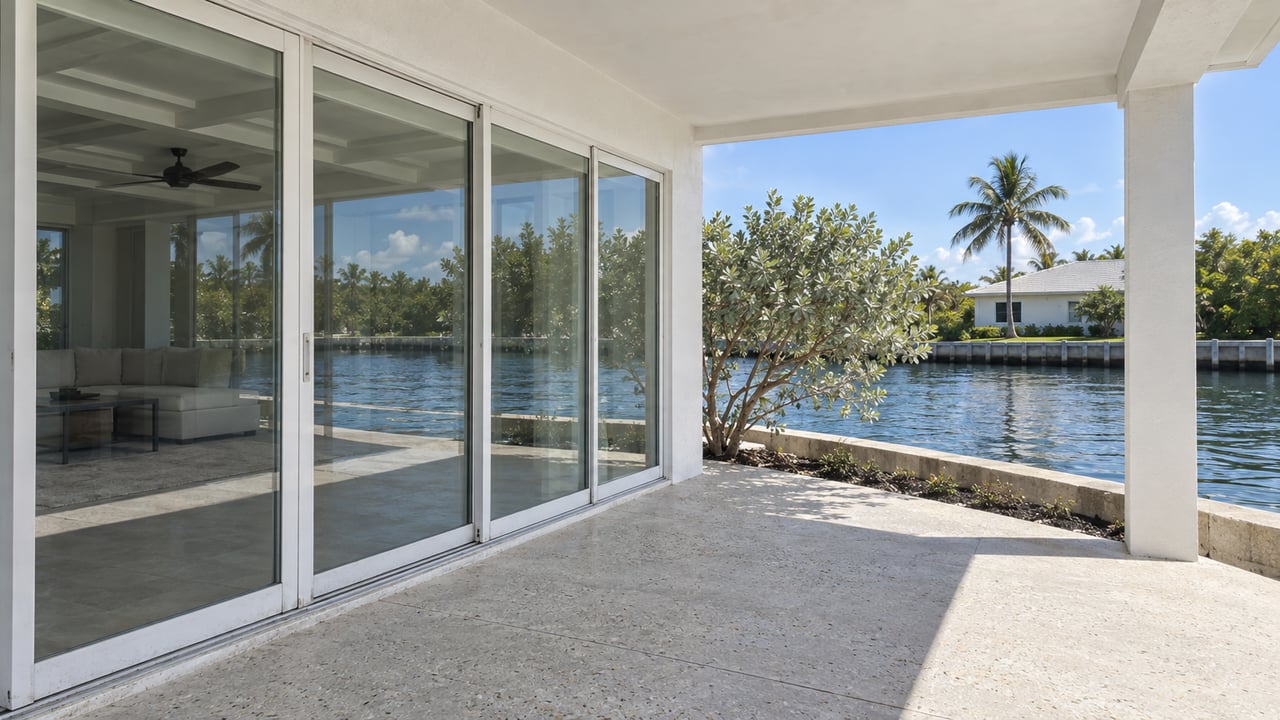
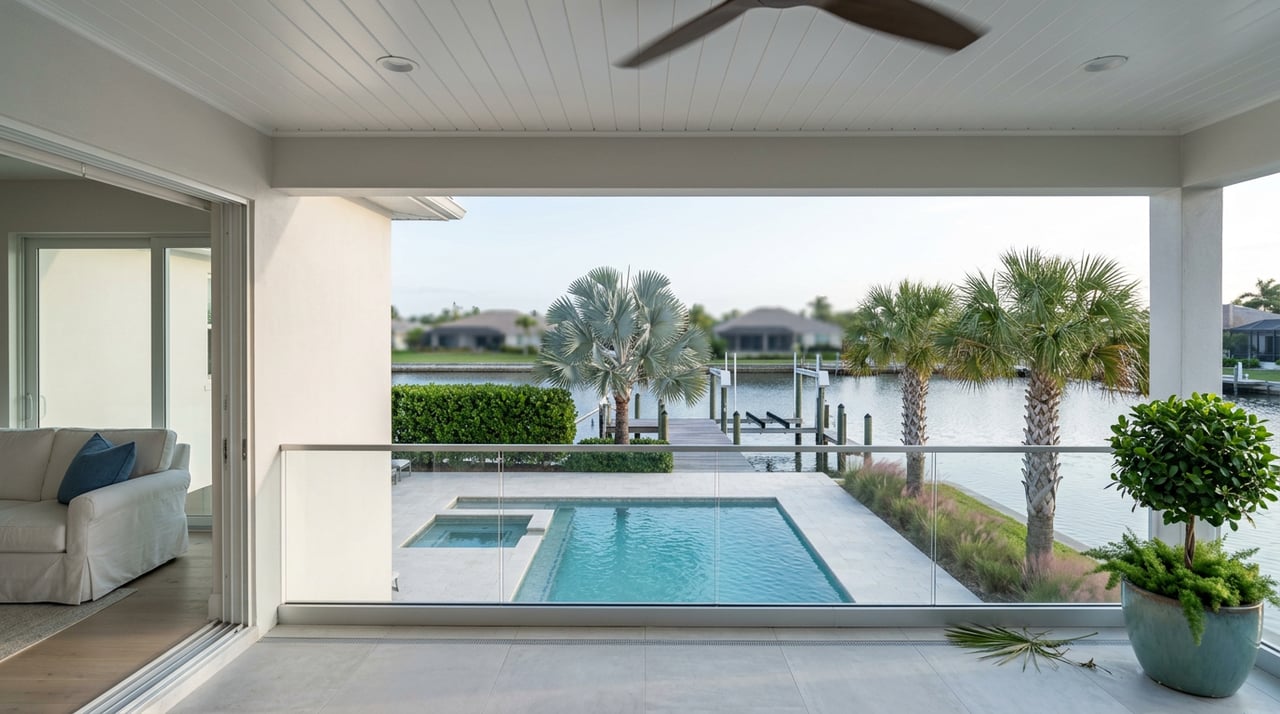
Screens can fail, furniture becomes debris, and large glass doors are vulnerable in high winds.
- Bring in all loose items: furniture, potted plants, decor, umbrellas, and cushions.
- For grills, turn off the fuel at the tank. Do not store propane cylinders indoors. If it must stay outside, secure it away from structures.
- Close and lock exterior doors. Lower hurricane shutters or install approved coverings over glass doors and windows according to manufacturer and Florida Building Code guidance.
- Check visible lanai fasteners and tighten obvious loose items. Do not take on structural work beyond your skill level.
- Trim trees and remove dead limbs. Move large potted plants to protected spots or lay them flat and tie them down.
- Photograph the lanai framing, screens, and doors.
Document everything before the storm
A complete record speeds up insurance claims and repairs.
- Take date‑stamped photos and videos of your boat, lift, lanai, and major home features.
- Keep an inventory with make, model, serial numbers, purchase details, and receipts for big‑ticket items like boat engines, lifts, and electronics.
- Store copies in the cloud or offsite so your records survive local damage.
- Keep a contact list for your insurer, agent, boatyard, lift installer, electrician, contractors, and city or county building departments.
After the storm: safety and first steps
Safety comes first. Do not return until officials say it is safe. Watch for downed lines, gas leaks, standing water, and unstable structures.
- Avoid wading in floodwater. Hazards and contamination may be present.
- Treat all power lines and dock circuits as energized until verified safe. Hire a licensed electrician for any reconnection.
- If you smell gas, evacuate and call the utility.
When it is safe to assess, document damage with wide shots and closeups, including serial numbers. Keep receipts for temporary repairs. Do not discard damaged items until your insurer inspects them unless they are a safety or hygiene risk. If you must dispose of items, take photos and keep a small sample when possible.
Insurance basics for Florida storms
Understanding your policies helps you plan your next moves.
- Flood vs wind: Flood damage from surge or inland flooding is generally covered only by a flood policy. Wind damage is typically under your homeowner’s wind or hurricane coverage.
- Hurricane deductible: Many Florida policies use a percentage deductible based on your dwelling limit. Confirm your deductible type and amount now.
- Boat coverage: Check named‑storm provisions and whether lift damage is included or limited. Start your claim quickly and follow prompt notice requirements.
Permits and recovery in Cape Coral and Lee County
Temporary emergency repairs are usually allowed to prevent further damage, such as tarping roofs, boarding openings, or temporary seawall stabilization. Take photos and keep receipts.
Permanent work often needs permits and inspections. Most structural repairs, electrical reconnections, seawall work, and dock or lift replacements must meet current Florida Building Code and local requirements.
Who to contact
- City of Cape Coral Building Division for permits, inspections, and contractor licensing guidance inside the city.
- Lee County Building Services and Lee County Emergency Management for county jurisdictions, debris removal, and recovery updates.
- Florida Department of Environmental Protection for submerged lands, mangroves, and environmental permits.
- U.S. Army Corps of Engineers for work in navigable waters and certain wetlands.
Common permit scenarios
- Screens and nonstructural lanai elements: May require permits depending on scope. Confirm before starting.
- Door and window replacement with impact‑rated units: Usually permitted and must meet current code. You may earn insurance mitigation credits.
- Seawall repair or replacement: Often needs state authorization and local permits. Emergency stabilization may be allowed, but permanent work requires engineering and permits.
- Boat lift replacement: Can require submerged lands authorization and local permits for structures over water.
- Dock electrical circuits: Repairs and reconnection must meet electrical code and typically require inspection by a licensed electrician.
A simple recovery sequence
- Ensure personal safety and secure immediate hazards.
- Document all damage and contact your insurer to open a claim.
- Make temporary repairs to prevent further loss and keep receipts.
- Contact the City of Cape Coral Building Division or Lee County Building Services to confirm permit needs.
- Get written estimates from licensed, insured contractors. Verify licenses and references.
- Apply for permits and schedule inspections as required.
- Complete repairs to current code and keep all permits and documentation for your records and future resale.
Quick local resource checklist
- National Hurricane Center and NOAA for storm forecasts and surge guidance.
- FEMA and Ready.gov for home and boat preparedness, documentation, and recovery steps.
- BoatUS and the U.S. Coast Guard for boat and marina hurricane planning.
- City of Cape Coral Building Division for permits and inspections within the city.
- Lee County Emergency Management and Lee County Building Services for county recovery and permitting.
- Florida Department of Environmental Protection and the U.S. Army Corps of Engineers for work in or over the water.
- Insurance Information Institute or your insurance agent for deductible and claim guidance.
Final thoughts
In Cape Coral, a few hours of early preparation can protect your boat, lift, and lanai from the worst storm damage. Focus on what you can control: remove or secure movable items, disconnect and protect power safely, document everything, and line up your permit and contractor plan now. If a storm hits, you will be ready to act and recover faster.
If you are planning a move in Southwest Florida and want local guidance that blends practical preparedness with smart buying or selling strategy, let’s talk. Reach out to Lindsey Moffat to plan your next step. Let’s Connect.
FAQs
What should Cape Coral boat owners do first when a hurricane is forecast?
- Haul out early if possible; otherwise secure the boat in the most protected location you can, remove loose gear, add extra lines and chafe protection, disconnect shore power, and document the vessel’s condition.
Is it safe to leave my boat on a lift during a major storm in Cape Coral?
- Many experts suggest removing the boat to reduce risk to both the vessel and the lift; if removal is impossible, follow your lift manufacturer’s instructions exactly and have power disconnected by a licensed electrician.
How do I secure my lanai before a hurricane in Southwest Florida?
- Bring in loose items, secure or remove cushions and umbrellas, shut fuel to grills, close and lock doors, install shutters or approved coverings, and photograph lanai components for your records.
What insurance deductibles apply to hurricane damage in Florida?
- Many homeowner policies use a hurricane deductible that is a percentage of your dwelling limit, while flood damage requires a separate flood policy; confirm details with your insurer before storm season.
Do I need a permit to repair a dock, lift, or seawall in Cape Coral?
- Permanent repairs usually require permits and may need environmental authorization; contact the City of Cape Coral Building Division or Lee County Building Services to confirm requirements before starting work.
What immediate safety steps should I take after a hurricane near my dock and lift?
- Wait for official clearance, avoid floodwater, treat all lines and circuits as energized, keep your distance from damaged structures, and use a licensed electrician for any power reconnection.