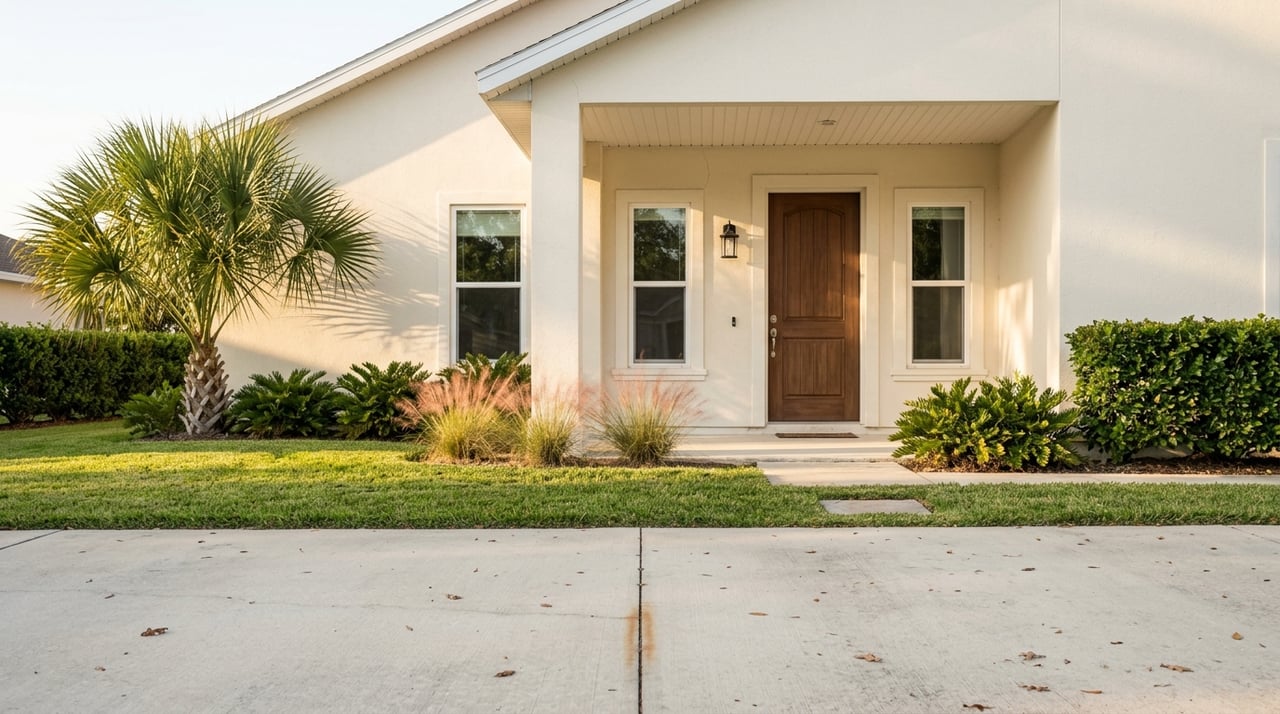
Drive down Lake Babcock Drive past Founder's Square this month and you'll pass gated entries where the model homes closed years ago and the sales trailers moved on to other neighborhoods. Turn the other way and head out Cypress Parkway toward MidTown, and you'll pass active grading and framing crews building out the second Publix this town has ever had. Both scenes are Babcock Ranch in August 2026. Only one of them is where new construction is actually happening right now.
That split matters more than the headline number everyone's been citing this summer. Babcock Ranch sold 748 homes through July 2026, a 29% jump over the same period last year, according to Gulfshore Business, and the town is already on pace to top its own 2025 record of 1,066 homes sold, a year that made it one of only seven master-planned communities in the country to cross the 1,000-sale mark. Read as a single number, that looks like uncomplicated momentum. Read against the map, it's two different housing markets moving at different speeds, with different costs attached to each, and most of what gets written about the growth doesn't separate them.
What's actually driving the number
The sales surge isn't coming from turnover in the neighborhoods everyone already knows. It's coming from inventory that didn't exist a few years ago. The Canopy at Babcock Ranch, the community's first apartment complex, added 373 rental units to the count. The Flatwoods brought single-family rental homes into the mix for the first time. New commercial development, from B Street to MidTown Marketplace, is expanding the footprint of the town itself, and residential construction is following that expansion outward rather than filling in what's already built.
That distinction is the whole story for anyone comparing a home in Babcock Ranch's original neighborhoods to one in its newest phase.
The neighborhoods you can no longer buy new
Several of the communities closest to Founder's Square, the ones that opened when Babcock Ranch was still proving its concept, are effectively built out. Lake Timber, the town's original estate neighborhood, is largely resale-only at this point. So are Edgewater, Edgewater Shores, Babcock National, Parkside, and Crescent Grove. If you want a home in any of these, you're shopping listings of homes that already have owners, not a builder's inventory list. That's not a knock on the neighborhoods. It's simply what happens when a section of a master-planned community sells through its lots. But it means the "buy new near downtown" option that a lot of buyers assume is on the table when they hear about a record sales year isn't actually available in the parts of town closest to the lake and the restaurants.
Where the new construction actually is
The active building right now is concentrated in the newer phases. Meritage Homes is selling in Crescent Lakes starting at $269,999. D.R. Horton is building in Palmetto Landing from $292,990. Lennar has entry points in the high $200s in Sabal Glen, with Tucker's Cove also starting in that range. And the commercial backbone supporting all of that new residential ground is rising fast: B Street, the mixed-use district anchoring WestTown, has its 42,000-square-foot office building already open since January 2026, with Kitson & Partners running its own headquarters out of the second floor. Signed retail and dining tenants there include Carondelet Drink Parlor, Kong Fu Ramen, Flourish and Pops, Sugaring LA, Wholistic Motus, BBQ King Smokehouse & Tavern, Clase Azul, Firebelly Burger Co., Mangiamo Italian, Sloan's Ice Cream, and Three Oaks Wellness, with the broader district scheduled for completion this fall.
Out on Cypress Parkway, MidTown Marketplace is under construction around a second Publix, this one running about 55,000 square feet with an expanded prepared foods section and its own Publix Liquors, according to a report in the North Fort Myers Neighbor. That store anchors a roughly 140,000-square-foot retail and dining district that construction crews broke ground on earlier this year.
This is genuinely exciting for anyone who wants to be close to the next wave of restaurants and retail as it opens. It's also the part of town carrying the newest infrastructure debt, and that's the piece that doesn't show up in a builder's brochure.
The 30-year clock nobody explains at the sales center
Every home in Babcock Ranch carries a Community Development District assessment on top of its HOA dues. CDDs are a standard Florida financing tool, created under state law, that let a developer issue bonds to pay for roads, water, and drainage up front, then recover that cost from homeowners over time through an annual assessment on the property tax bill. That assessment has two parts. The operations and maintenance portion pays for the ongoing upkeep of that infrastructure and never goes away as long as the district exists. The debt service portion pays down the original construction bonds and sunsets on its own timeline, generally around 30 years after a given home was built.
That second part is the one that matters here. A home finished in Lake Timber or one of the other original neighborhoods back when Babcock Ranch welcomed its first residents has already had several years shaved off that clock. A brand new build closing this year in MidTown or Crescent Lakes starts the full 30-year run today. It's also worth knowing that the going estimate agents use locally for total property tax plus CDD, expressed as a share of the home's price, has moved up over the past year specifically because of the new debt layered on to finance MidTown's roads and utilities as those neighborhoods opened.
Here's a quick side-by-side of what that split actually looks like on the ground right now:
| Neighborhood | New construction available? | Where it sits on the CDD clock |
|---|---|---|
| Lake Timber, Edgewater, Babcock National | Resale only | Debt service already several years in |
| Crescent Lakes, Palmetto Landing | Actively selling new | Fresh assessment, full term ahead |
| Sabal Glen, Tucker's Cove | Actively selling new | Fresh assessment, full term ahead |
| MidTown (broader phase) | New construction and commercial under active buildout | Newest debt layered onto the district |
What this actually means if you're choosing between the two
If what you want is walkability to Founder's Square, established landscaping, and a home someone else has already lived in, you're looking at resale in the original neighborhoods, and that's a perfectly reasonable trade. Just ask for the current CDD disclosure on any resale you're considering, and specifically ask how many years remain on the debt service portion rather than only looking at this year's total. Two homes with an identical listing price can carry very different remaining obligations depending on when that section of the district issued its bonds.
If what you want is to choose your own floor plan and finishes, new construction is genuinely available in Crescent Lakes, Palmetto Landing, Sabal Glen, and Tucker's Cove, and MidTown's retail expansion will eventually put a second Publix and a real restaurant row within reach of those neighborhoods. Budget for the full three-decade CDD run on top of the base price, and treat the "opening this fall" timeline on B Street and the still-unannounced opening date for MidTown Marketplace as things to verify rather than assume, since construction timelines on a project this size can shift.
The record sales year is real, and it's good news for demand across the town generally. But a rising tide only lifts the neighborhoods that still have lots left to sell. Everywhere else, the opportunity is in the resale column, and it comes with a shorter clock still running on the bill.
A short FAQ
Can I still buy new construction close to Founder's Square? Not in the original phase neighborhoods. Lake Timber, Edgewater, Edgewater Shores, Babcock National, Parkside, and Crescent Grove are essentially built out, so any available homes there are resales. New residential construction is concentrated farther out in communities like Crescent Lakes, Palmetto Landing, Sabal Glen, and Tucker's Cove, and in the MidTown expansion along Cypress Parkway.
Does the CDD assessment ever go away? The debt service portion does, typically around 30 years after the home was built, once the original infrastructure bonds are paid off. The operations and maintenance portion continues for as long as the district exists, since it covers ongoing upkeep rather than one-time construction costs.
Why did the estimated tax and CDD rate on Babcock Ranch homes go up? The added debt used to finance roads and utilities for the newer MidTown and Phase II neighborhoods pushed the local estimate from roughly 1.7% of a home's price to roughly 1.8%. It's a reflection of how much new infrastructure debt the district has taken on to support the town's continued expansion, not a change to what existing homeowners in older sections owe.
Whether you're weighing a resale near Founder's Square against new construction farther out on Cypress Parkway, the numbers on paper only tell part of the story until someone pulls the actual CDD disclosure and runs the comparison for your specific address. That's the kind of detail work Lindsey Moffat does with every Babcock Ranch buyer before they ever sign a contract. Let's connect and figure out which side of this market actually fits what you're looking for.