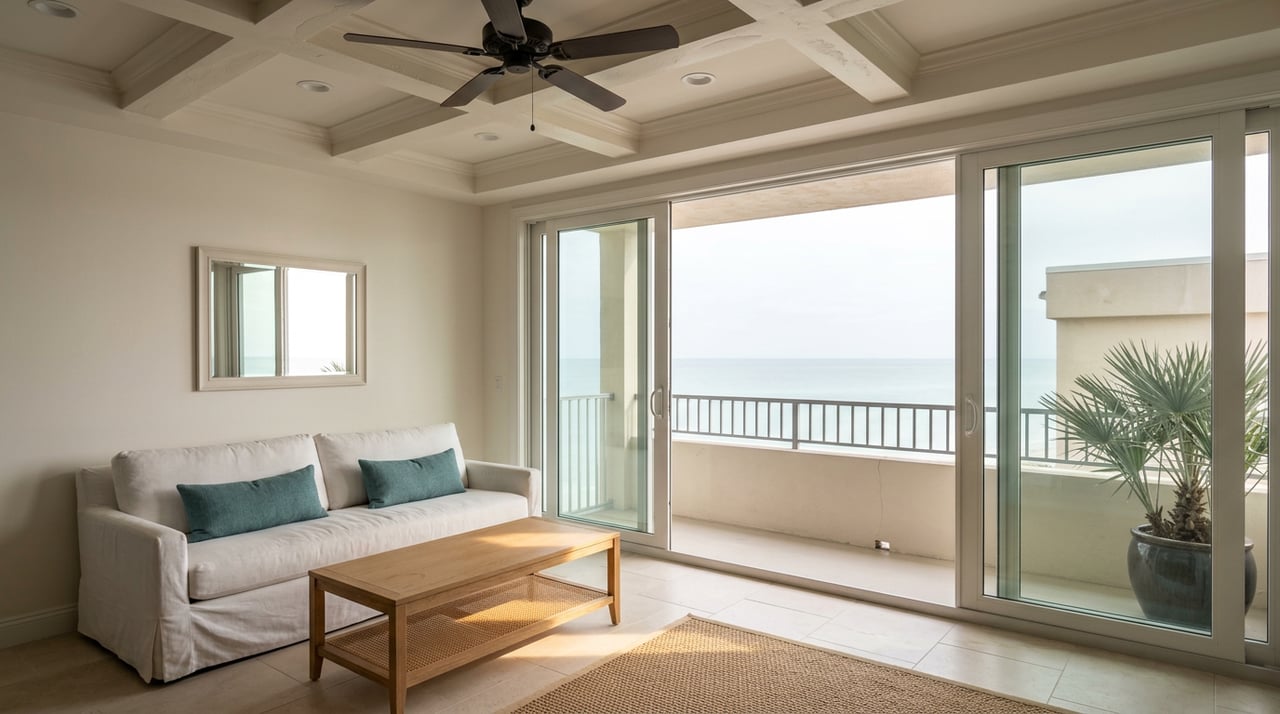
Picture a buyer under contract on a two-bedroom unit in Park Shore. The listing sheet looks clean. HOA dues are reasonable. The building has that classic 1970s Lutgert-era charm, tray ceilings, a wall of glass facing the Gulf. Then the board minutes surface during the document review period: a structural integrity reserve study flagged roof and waterproofing work the association hasn't fully funded, and a vote on how to close the gap is scheduled for next month. The buyer isn't looking at a listing anymore. They're looking at a liability they didn't price in.
That scenario is playing out across Naples right now, and it's not because condos got older overnight. It's because a set of deadlines that Florida lawmakers set years ago, in the wake of the Champlain Towers South collapse, have finally landed. The paperwork that used to sit in a filing cabinet is now the document that decides what a unit is actually worth.
Why Park Shore and The Moorings Went First
Florida's milestone inspection law doesn't treat every condo the same way. A building within three miles of the coastline has to complete its first structural inspection at 25 years of age, based on its certificate of occupancy, and every 10 years after that. A building further inland gets until 30. The City of Naples posts the distinction plainly: coastal age triggers the clock five years sooner.
That single rule explains why Naples' oldest beachfront neighborhoods are the ones with answers first. Park Shore's high-rises went up mostly between 1970 and 1983, the early work of the Lutgert Companies, starting with a mid-rise and townhome combination and moving into taller towers through the decade. The Moorings has condo stock that goes back even further, with buildings dating to the 1950s and continuing through the mid-1980s. Nearly all of that inventory sits inside the three-mile coastal band, which means nearly all of it already crossed the 25-year threshold years ago and has already been through at least one milestone cycle.
Compare that to something like La Perle, a small luxury project completed in 2022, or the 3300 Gulf Shore development from Kolter Urban currently under construction on the former Executive Club site in the Moorings. Those buildings are decades away from their first mandatory inspection. A buyer looking at a 2022 building and a 1978 building isn't just choosing a finish level or a floor plan. They're choosing between a building with a documented compliance history and one that won't face a structural test for another two decades.
What the Completed Reports Actually Showed
The state gave associations until the end of 2025 to complete their first structural integrity reserve study if the building existed before July 2022. By mid-2025, according to reporting from the Naples Press citing the Gulf Shore Association of Condominiums, 83 percent of the 245 buildings identified by the city's building department had already turned in their reports. That's not a small compliance gap closing quietly. That's most of Naples' older condo stock producing, for the first time, a public paper trail on whether its reserves match its repair needs.
The market noticed. Local Realtors quoted in that same reporting described a shift from hesitation to momentum: buyers who had been sitting on the sidelines over assessment fears and post-Ian insurance anxiety started moving again once the inspection results gave them something concrete to evaluate instead of a guess. In a July 2026 market update, Naples condo sales were reported up 17.7 percent over the prior 12 months, with inventory down 20.5 percent and months of supply down 32 percent year over year. That's not a market that got safer. It's a market that got legible.
Here's the comparison worth sitting with:
| Building era | Example | Milestone status in 2026 | What a buyer is actually evaluating |
|---|---|---|---|
| 1950s-1980s coastal | The Moorings, Park Shore | First inspection and SIRS cycle already due or completed | Documented reserve health, real repair costs, assessment risk |
| Early 2000s coastal | Buildings built after Florida's 2002 code update | Years from first milestone trigger | Newer systems, but still on the same 25-year coastal clock eventually |
| 2020s new construction | La Perle (2022), 3300 Gulf Shore (in progress) | Decades from first inspection | No inspection history yet, unproven long-term reserve trajectory |
A Market Splitting in Two
Before these deadlines hit, an older Naples condo and its reserve fund were mostly a matter of trust. You looked at the dues, asked the board a few questions, and hoped the roof held. Now there's a document that either confirms the trust was earned or exposes that it wasn't.
That's producing a real split in pricing behavior. Buildings that came through their SIRS with fully funded reserves and no pending special assessments are trading with more confidence, because the biggest unknown in condo ownership just got answered. Buildings that came through with funding gaps are facing harder negotiations, because Florida law changed what happens next. For any budget adopted on or after December 31, 2024, associations can no longer put a reserve waiver to a unit-owner vote for the structural components a SIRS covers. The old move, where a board kept dues low by voting down full reserve funding year after year, isn't available anymore. If the money isn't there, the only paths left are a special assessment, a loan the association services through higher dues, or some combination of both.
For a buyer, that means the SIRS report isn't background reading. It's the closest thing Naples condo buying has to a financial appraisal, and it's arguably more important than the unit's own condition, because a perfectly renovated interior sitting inside a structurally underfunded building is still exposed to the same bill as every other unit in the tower.
The Clock That Decides Who Pays
The other piece of friction that catches buyers off guard has nothing to do with the building's age and everything to do with timing. Special assessments aren't billed to whoever owns the unit when the work happens. They're billed to whoever owns the unit when the board approves the assessment.
That means a buyer can close on a unit where the board was "discussing" a repair project, with no vote yet taken, and find themselves holding a five-figure bill weeks later once that vote passes. The reverse is also true: a seller can be sitting on a unit where an assessment has already been approved but not yet due, and unless the purchase contract specifically allocates that cost, the buyer inherits it at closing.
This is the specific line item worth negotiating before signing anything, not after. A contract can specify that the seller is responsible for any assessment approved before the closing date, even if payments extend past it. It can require full disclosure of any known pending assessments, active repair discussions, or engineering reports identifying required work. And it can make the buyer's obligation to close contingent on reviewing the association's official records, including recent board minutes and the reserve study itself, not just the HOA's summary of dues.
What to Ask For Before You Write the Offer
If you're evaluating a Naples condo built before 2000, especially anything in Park Shore, The Moorings, or another coastal-adjacent building, request these before you're under contract, not during your inspection period:
- The completed milestone inspection report and its date
- The structural integrity reserve study, including the funding schedule for all eight required components
- The last 12 months of board meeting minutes
- Written confirmation of any pending or recently approved special assessments
- The association's current reserve balance compared to the funding schedule in the SIRS
These are official association records, and Florida's regulatory framework through the Department of Business and Professional Regulation requires associations to make SIRS filings and inspection data available as part of the public compliance record. A building that hands these over without hesitation is telling you something. A building that stalls is telling you something else.
A Short FAQ
Does every Naples condo have to complete a milestone inspection? Only buildings three stories or taller. Smaller buildings and most single-family HOAs aren't subject to the milestone or SIRS requirements, though some choose to complete a reserve study anyway.
If a building already completed its SIRS, does that mean it's safe from assessments? Not necessarily. It means the association has a documented plan for its structural components. Whether that plan is fully funded, underfunded, or funded through a loan that raises monthly dues is exactly what the report tells you.
Can I still negotiate price if the SIRS shows a funding gap? Yes, and buyers increasingly do. A documented shortfall is leverage, whether that means a price reduction, a closing credit, or a seller commitment to cover any assessment that gets approved before closing.
What about buildings finished after 2002? Florida strengthened its building code that year, and many newer coastal buildings have fewer of the deferred maintenance issues showing up in 1970s and 1980s towers. They're still on the same 25-year coastal clock, just further from triggering it.
If you're weighing a Naples condo against these questions and want someone who reads reserve studies as carefully as floor plans, Lindsey Moffat can walk the documents with you before you write an offer. Let's Connect.